


From Busquets to Camavinga: The "Anti-Press" Midfielder Evolution

In modern football, pressing has become a defining tactical feature. Teams from the top of the Premier League to the lower tiers of La Liga press with intensity, seeking to disrupt build-up play, force errors, and create chances in transition. Amid the rise of high-intensity pressing systems, a distinct type of midfielder has come to the fore—those who excel not in avoiding pressure, but in mastering it. From Sergio Busquets to Eduardo Camavinga, the evolution of the "anti-press" midfielder charts a fascinating tactical and technical development in the game.
The Origins: Sergio Busquets and the Geometry of Control
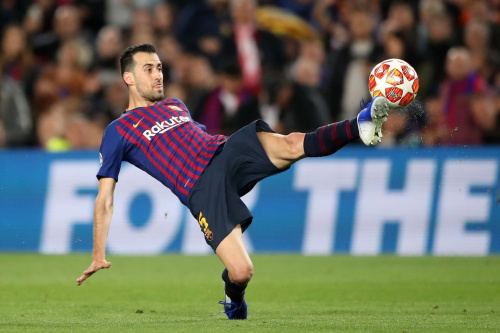
Sergio Busquets, the cornerstone of Pep Guardiola’s iconic Barcelona side, was never the fastest or flashiest player on the pitch. But his mind operated at a different speed. In an era when pressing wasn’t as widespread as it is today, Busquets became a master of spatial awareness, close control, and one-touch passes.
His role was not just to recycle possession, but to invade the press—to invite it, absorb it, and turn it against the opponent. Busquets perfected what could be called "press entrapment": waiting for an opponent to commit, then using a slight body feint, shoulder drop, or blindside turn to escape.
He redefined the holding midfielder’s role—not just a shield for the defense but a springboard for attack. His capacity to calmly control zones under high pressure inspired a generation.
Evolutionary Steps: Modric, Thiago, Verratti
As pressing systems became more structured and aggressive, midfielders had to adapt. This gave rise to a more mobile, technically audacious wave of anti-press midfielders. Luka Modrić, Thiago Alcântara, and Marco Verratti represent key evolutionary branches in this lineage.
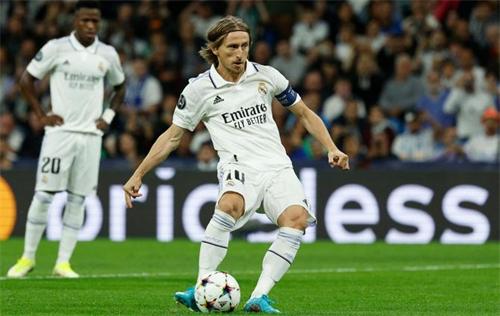
Modrić brought vertical dynamism and close dribbling to the equation. Unlike Busquets, who often played in a deeper pocket, Modrić could drive forward through pressing lines, carrying the ball under pressure rather than merely evading it with passes.
Thiago, particularly at Bayern under Pep and later at Liverpool, embodied the metronome-as-escape-artist model. His first-touch passing, use of disguise, and near-perfect balance made him an elusive figure for pressers.
Verratti, often overlooked in this conversation, was a phenomenon at wriggling out of tight spaces. His low center of gravity and aggressive ball retention style made him a one-man press breaker.
Each of these players added a layer to what it meant to be “anti-press”—more movement, more risk-taking, more multi-directional playmaking.
The Hybrid Modern: Eduardo Camavinga and the Next Phase
Enter Eduardo Camavinga—a player who doesn’t just resist the press but dismantles it with athleticism and aggression. While Busquets saw pressing as something to be nullified with positioning and patience, Camavinga sees it as an opportunity to explode through pressure.
What sets Camavinga apart?
Ball-Carrying Under Pressure: He doesn’t shy away from dribbling past the first line of press. Unlike the metronomic passers before him, Camavinga uses his burst of pace and sharp turns to drive through congested midfield areas.
Defensive Grit with Offensive Transition: He often wins the ball back and initiates the counter in the same movement. This dual capability marks a shift toward more complete, transitional anti-press roles.
Positional Flexibility: Camavinga’s ability to play as a left-back, central midfielder, or pivot is symbolic of the modern trend—fluidity over fixed roles. His effectiveness is not tied to a zone but to situations.
Tactical Implications: The Death of the Classic Destroyer?
As pressing systems have improved, the pure destroyer role (think Gennaro Gattuso or even early Casemiro) has become less effective. In their place, hybrid anti-press midfielders have emerged—players who combine ball-winning with line-breaking progression.
The anti-press midfielder is not just a tactical countermeasure. He’s an accelerator—a player who turns defense into attack with fluid motion and control. Press-resistant players are no longer luxury items; they’re necessities for possession-based or counter-pressing systems.
Psychological Edge: Composure as a Weapon
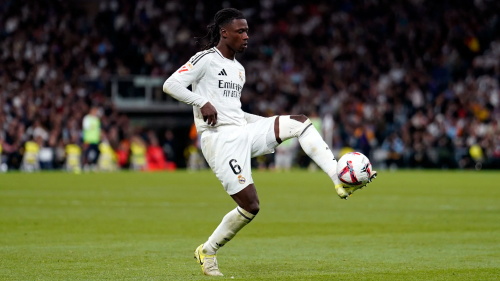
Busquets' greatest weapon was not his feet—it was his calm. Camavinga’s, arguably, is confidence laced with audacity. Across generations, the psychological trait remains central: anti-press midfielders must have nerves of steel. They play in the eye of the storm—where mistakes mean goals. The margin for error is razor-thin, and yet, they flourish there.
Who’s Next?
Younger players like Jude Bellingham, Gavi, and Frenkie de Jong each bring something new to the anti-press archetype. Bellingham adds late box runs, Gavi offers gritty tenacity with flair, and De Jong channels the Busquets-Modrić hybrid playbook. As systems become even more intense and automated, the value of unpredictable, composed midfielders will only increase.
In this ongoing chess match, the midfield remains the board. And the anti-press midfielder is often the most cunning piece on it.
